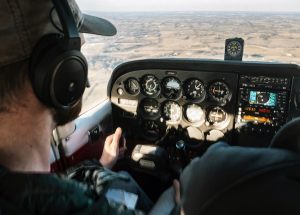
The greatest freedom in all of travel belongs to the private pilot. You navigate the complex web of airspace, plan your route across the magenta line, and command your own schedule. That unparalleled freedom means you do not have to settle for the crowded chaos of commercial terminals or the rigid schedules of airliners. You create the itinerary. You choose the destination. When a simple airport burger run gives way to a full-fledged aerial vacation, you want the destination to match the thrill of the journey. We are going to explore a handful of the world’s most magnetic fly-in spots, places that reward the careful planner and competent stick-and-rudder pilot with unforgettable sights and experiences. Pack your charts, check your weather, and file your flight plan, because we are heading to the best vacation spots the sky has to offer.
The Unique Challenge of the Western Island Mesa
 Photo Credit: Santa Catalina Island’s Airport
When you fly the California coastline, you see an endless expanse of urban sprawl eventually give way to the calm blue of the Pacific. About 22 miles southwest of Los Angeles, however, a stunning piece of granite rises from the water, offering one of aviation’s most iconic vacation stops: Santa Catalina Island’s Airport in the Sky (KAVX).
Pilots know this airport is about more than just a destination; it is an accomplishment. Its single, 3,000-foot runway sits on a flattened mesa high above the ocean, presenting a challenging and unforgettable approach. As you descend toward the island, you realize the runway itself has a distinct up-slope when landing on the preferred Runway 22. This slope, combined with the narrow, 60-foot width and the visual distraction of sheer cliffs on both ends, creates a powerful optical illusion. Your brain tells you that you are too low, encouraging a higher approach than necessary. You must fight this urge and trust your airspeed and sight picture, being mindful of the significant downdrafts and turbulence that can ripple off the surrounding cliffs, especially in higher winds. Remember, the airport strictly prohibits touch-and-go landings, demanding a full-stop commitment after that scenic, over-water approach.
Once you safely tie down your aircraft, you step out onto a mountaintop plateau and feel the ocean breeze. The friendly team at the airport will assist you, but keep in mind that this remote location means no fuel is available, so you must plan your range accordingly. You pay the small landing fee, grab a famed cookie from the cafe, and catch a shuttle down the winding hillside road to the town of Avalon. Here, you trade the buzz of your engine for the hum of golf carts, the main mode of transportation in this charming, Mediterranean-style harbor town. You spend your days scuba diving in the crystal-clear Pacific waters, hiking the island’s interior, or simply relaxing on the beach before you climb back up the mesa, ready to execute an exhilarating down-slope takeoff from Runway 04.
Landing on Lake Huron’s Car-Free Gem
 Photo Credit: Mackinac Island Airport
If your perfect vacation involves stepping back in time and enjoying a quiet, genteel pace of life, then you should set your course for the Straits of Mackinac in northern Michigan. Mackinac Island Airport (MCD) serves as your gateway to a truly unique American experience. As you execute your non-precision instrument approach to the 3,501-foot Runway 08/26, you will appreciate the convenience of an airport maintained by the Mackinac Island State Parks Commission.
The main draw of Mackinac Island is what is missing: cars. Since 1898, the island has banned motorized vehicles, preserving a Victorian-era atmosphere you can only find elsewhere in the world. Once you secure your plane on the ramp and pay the small landing fee—remembering to plan your fuel stops elsewhere since Mackinac does not offer 100LL or Jet A on the field—you are ready to immerse yourself in the past. Your only options for transport are walking, biking, or taking a horse-drawn carriage. You find yourself spending afternoons exploring the historical fortifications of Fort Mackinac, sampling fudge from the island’s famous confectioneries, or cycling the eight-mile paved road that circles the island, offering breathtaking views of the Mackinac Bridge and Lake Huron. The flying experience is straightforward, and the post-flight vacation is pure, refreshing Americana. This is an ideal trip for a pilot looking for a relaxed journey where the scenery is beautiful and the final landing is uncomplicated.
The High-Altitude Art of Desert Flying
 Photo Credit: Sedona Airport
For the pilot who chases monumental landscapes and the kind of high-desert vistas that inspire meditation, Sedona, Arizona (KSEZ) stands alone. As you navigate the crowded airspace of the desert Southwest, you follow your flight plan toward the stunning red rock formations of the Coconino National Forest. The airport itself sits atop a large mesa at an elevation of 4,831 feet MSL, earning it the moniker “America’s Most Scenic Airport.”
The approach is everything you hope for, offering an unbelievable 360-degree view of the towering buttes and canyons that surround the town. However, the unique location presents serious operational considerations. You must be on your guard for the substantial wind shear, up-drafts, and thermals that develop off the mesa’s sheer sides, often forcing you to execute a higher-than-normal go-around if the approach feels unstable. The 5,132-foot runway provides ample length for all piston singles and light twins, but you definitely compute your density altitude and approach speed with the appropriate precision, especially during the hot Arizona summers.
Red Rock Aviation, the Fixed Base Operator (FBO), offers full service 100LL and Jet A, ensuring a hassle-free turn-around. Once you shut down your engine, the true Sedona experience begins. You grab a rental car right at the FBO and head into town to explore the world-renowned art galleries, partake in a scenic jeep tour, or perhaps try to tap into the famous energy vortexes that supposedly swirl through the red rocks. The flying is challenging and rewarding, and the vacation on the ground is spiritually and visually spectacular.
A Taste of Old World Aviation Charm in Texas
 Photo Credit: Gillespie County Airport
The Texas Hill Country offers its own unique form of escape, combining rolling vineyards, German heritage, and a deep appreciation for aviation history. Your destination here is Gillespie County Airport (T82), home to the one-of-a-kind Hangar Hotel in Fredericksburg, Texas.
Flying into T82 gives you a glimpse of what is to come. The hotel, built to resemble a World War II-era Quonset Hut hangar, sits right on the ramp. After you land on the generous 5,001-foot runway, the full-service FBO team helps you secure your aircraft. You literally walk off the ramp and into a 1940s-themed adult resort. The entire property commits to the theme, from the Officers’ Club lounge to the Airport Diner, which serves up classic American fare while you watch fellow pilots take off and land.
Fredericksburg itself provides the perfect counterpoint to the aviation immersion. You take a quick shuttle or car ride into the charming Main Street, where you explore over 150 unique shops, art galleries, and acclaimed German restaurants. You spend the rest of your trip tasting the dozens of wineries scattered throughout the region, all accessible from your home base at the airport. This destination manages to blend your passion for flight with a truly memorable, relaxing, and sophisticated cultural vacation.
Island Hopping and Customs in the Exumas, Bahamas
 Photo Credit: Exuma International Airport
For many pilots, a true rite of passage involves the first international flight. When you seek the ultimate adventure, you point the nose of your aircraft east and southeast, over the Florida coastline, and out across the open water toward the sparkling turquoise waters of The Exumas, Bahamas (MYEF/MYBG).
This is a trip that rewards meticulous pre-flight planning. Before you even depart the United States, you must ensure you carry U.S. Coast Guard-approved life vests for everyone aboard, file your mandatory eAPIS manifest for international travel, and have all your aircraft and personal documents in order. The over-water crossing itself, while not extremely long from South Florida, demands your focus and preparation, especially with regards to your survival gear and navigation.
Your initial landing must be at an official Airport of Entry to clear customs and immigration, which you find at MYEF (Exuma International). The process is famously quick and friendly, and once you have your Cruising Permit, the true magic of the Exumas begins. You can now engage in one of the most exciting aspects of Bahamian flying: island hopping. There is no need to file a flight plan for flights between islands, allowing you the genuine freedom to explore uninhabited cays, private beaches, and unique resorts, all just a short hop away. The visual reference over the incredibly clear, shallow water is breathtaking, offering an unparalleled view that you simply cannot get from an airliner. You tie down your plane, jump into the water, and suddenly you know why you have a pilot’s license.
The Backcountry Charm of the Grass Strip Resort
 Photo Credit: Gaston Resort White River Resort
Not every premier fly-in destination requires a complicated approach or international customs. Some simply offer a perfect escape for the soul. Gaston’s White River Resort in Arkansas (3M0) is one of those places. This destination is all about switching off the noise of the modern world and immersing yourself in a world-class fishing and nature experience.
Your landing is truly a classic general aviation experience. Gaston’s boasts a 3,200-foot well-maintained turf runway, nestled in a valley beside the famous White River. As you fly your downwind, you appreciate the beauty of the surrounding Ozark Mountains. When flying into a grass strip, you must maintain a higher level of awareness and proficiency, using soft-field techniques and recognizing that a grass runway requires a different landing sight picture than pavement. Pilots often note that the approach requires you to fly close to the ridgeline, adding a layer of enjoyable challenge to the final approach.
Once on the ground, the resort immediately takes care of you. The owner, Gaston’s White River Resort, maintains the strip itself, and the entire facility caters to the outdoor enthusiast. You spend your days fishing for trout on the White River, enjoying the hospitality of the resort’s acclaimed restaurant, and retiring to your own private cabin. This fly-in destination is the antidote to high-stress flying, offering a quiet, friendly, and utterly relaxing experience where the simple joy of flying and the beauty of nature perfectly intersect.
Conclusion
The pilot’s certificate in your wallet is not just a license to operate an aircraft; it is a passport to adventure. From the high-altitude challenges of a mesa landing to the over-water thrill of an international flight, the world’s most incredible vacation spots actively welcome the private aviator. You have the skills, you own the machine, and the map is wide open. Now is the moment to stop dreaming about your next great escape and start planning your next great flight.